

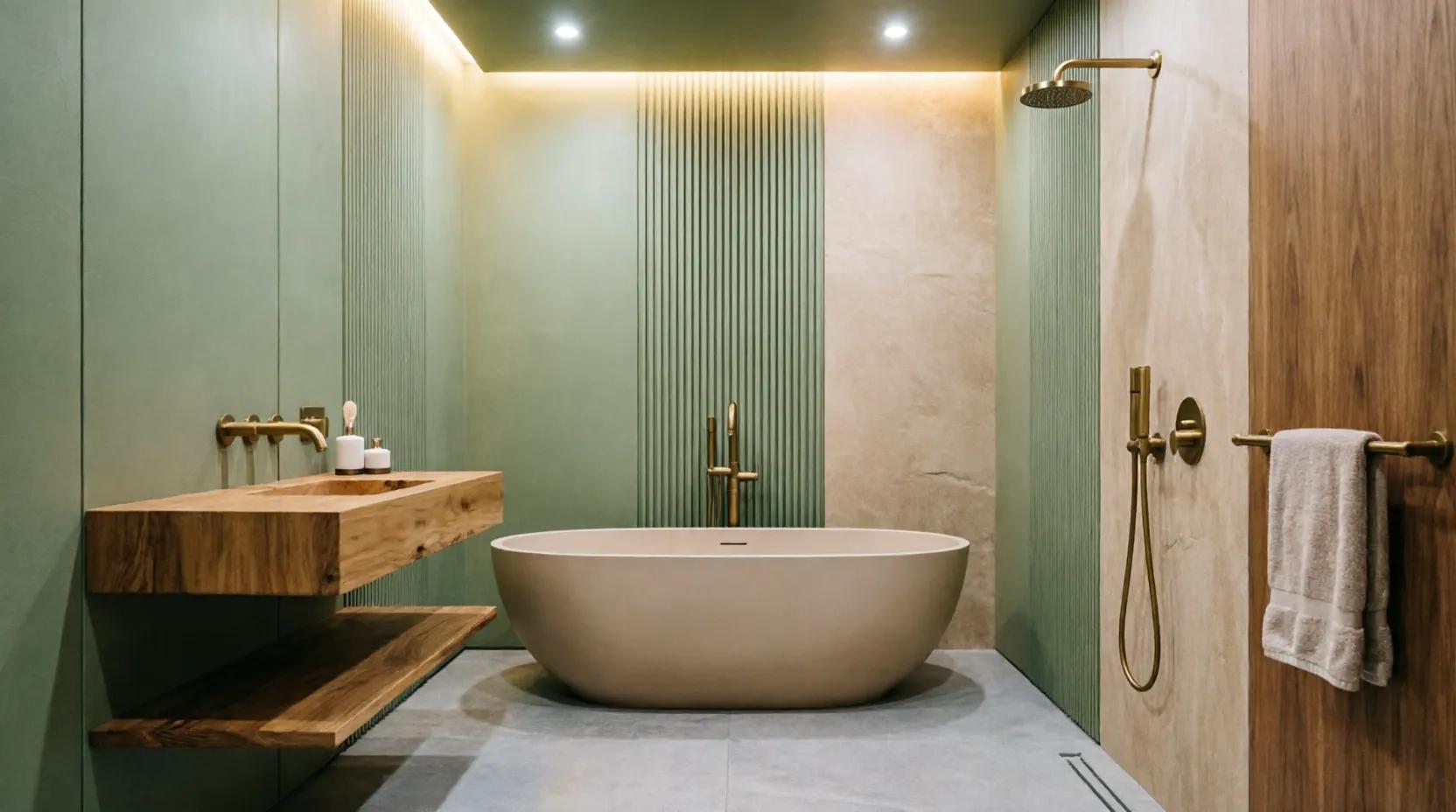
A spa-style bathroom focuses less on luxury fittings and more on the ambience they create – calming colours, soft lighting, the use of natural textures and surfaces without the clutter of tiles. The walls make up the majority of what you see in a bathroom, so the right panel can create that spa-like feeling of enclosed space without the cost and mess of tiling, but the wrong choice can make a room seem bare or sterile. This guide covers which panel styles, colours and finishes work well in a spa bathroom, and what to look out for to ensure the result remains attractive and functional.
What Makes a Spa Bathroom Feel Like a Spa
Spa-inspired bathrooms tend to share characteristics such as a muted, cohesive colour palette, the use of texture over a smooth finish, limited joins and lines, and warm, layered lighting. The appearance of continuous wall surfaces plays a part in this – panels create fewer visible joins than tiles and grouting, resulting in the comforting appearance of a seamless finish.
Practicality plays a key role as a spa bathroom is a place to enjoy long hot showers and soaks. Panels used in these areas should be specified for wet-room use and have suitable jointing and trim systems to avoid water penetration – a beautiful panel design is little comfort if water is damaging it.
Stone and Marble Effects for a Natural Background
Stone-effect panels are one of the most popular choices for spa-style bathrooms as they give a grounding, natural appearance to a room. The more subtle variations in design and colour are best in a spa-style bathroom – soft travertine, pale limestone and honed grey or cream marbles with subtle veining are a comforting presence. Larger-than-life black and white designs are more suited to the glamorous look of a hotel bathroom.
Look at the print in detail on the panel – veining that is consistent over the length has a more artificial look, and a less shiny finish mimics the appearance of honed stone over polished. If the appeal of real stone is tempting, keep in mind that natural stone requires specialist cleaning and protection unlike panels.
Warm Colours and Wood Effects
Wood-effect panels create a warm contrast to the coolness of stone textures and surfaces. Pale oak, ash and mid-tone walnut effects work well in this style with ribbed or slatted designs creating a comforting sauna effect on a feature wall. The practicality of using real wood is limited in a wet environment, so a wood-effect panel is a good option for a feature or shower area.
Use wood sparingly with other textures as one wall of a wood-effect panel with other more neutral panels on the rest of the walls has a more cohesive, less dated look than covering all walls in wood-effect panels.
Plain Colours and Neutrals
Not every spa-style bathroom needs a patterned panel to make an impact. Sage green, warm sand, clay, stone grey or a muted blue-green panel in a subtly textured finish is a comforting presence in any well-lit bathroom. Plain panels allow other features such as a freestanding bath, timber stool, plants or ambient lighting to shine as well.
Darker tones such as deep green or charcoal can be used to create a cocooning, almost steam-room effect space, but limescale and water spots will be more noticeable on darker tones, especially in hard water areas, and need good lighting to lift the room. A satin or matt finish is generally more forgiving than gloss in darker tones.
Finishes That Suit the Mood
The finish of the panel does a lot to create the right mood and appearance in a spa-style bathroom. A gloss finish reflects light and has more of a utilitarian feel, whereas satins and mattes absorb and diffuse the light, creating a more restful atmosphere. Textured finishes such as fine grain and riven stone create a more tactile feel that is less achievable with a flat-printed panel.
Some finishes offer less practicality – deep textures and grooves may trap water or soap scum and require regular cleaning, and a matt finish can be marked by a rough cleaning cloth. Ask to see a sample, and splash some water on it; how it looks as it dries can be a useful indicator.
How to Fit the Panels for the Best Look
A spa-style bathroom is about attention to the detail, and the correct fit of the panels is important to achieve the look. Panels should always be fitted to a dry, solid wall and the correct trims and sealant should be used where edges, corners and joints are. Poor sealing is the most common cause of water getting behind panels, defeating the purpose of a waterproof wall finish. Follow the manufacturer's guidance on fitting the panels and on how long the sealant should be left to cure before the panel is exposed to water.
For a continuous spa look, consideration should be given to where the trims will fall.Colour-matched trims keep the lines of the paneling clean and any visible join minimalised, whereas a metallic trim can be used as part of a considered design feature. Where the enclosure is the feature, compare how each range handles corners and joints as well as the surface design in choosing shower wall panels.
How to Complete the Look
Panels form the background to a spa-style bathroom, and the rest of the room's contents complete the look. Warm, dimmable lighting has a bigger impact than any other choice, so consider using layered lighting rather than one large fitting in the centre of the ceiling. Use real materials such as timber or cotton towels and stone accessories wherever possible and add in plants that can tolerate the humidity of a bathroom. Keep fittings minimalist in their finish – brushed brass, matt black or brushed nickel – and avoid cluttering shelves.
A quick check to see how a scheme would come together is to use a dominant surface and one supporting texture with one accent. Soft stone-effect panels on the main walls, a wood-effect panel behind the bath and brushed brass fittings would be an example of a scheme in this style. When considering ranges and finishes to create a scheme like this, the guide to the Best Shower Panels for Modern Bathrooms is a good starting point to see how styles work together.
Before You Buy Samples
Decide on the kind of look you want to create and narrow the panels to two or three options to view. Ask to see samples and view these in your bathroom at different times of day and in your bathroom's lighting and how they look when wet. Check the manufacturer's guidance on use in wet areas and on fitting and cleaning, and ensure the wall will be dry when panels are fitted. A bathroom that still feels calm after you have viewed the samples for a few days is a good sign.